
How the Bare Faith Theory
Relates to the
Heresy of Decisional Regeneration
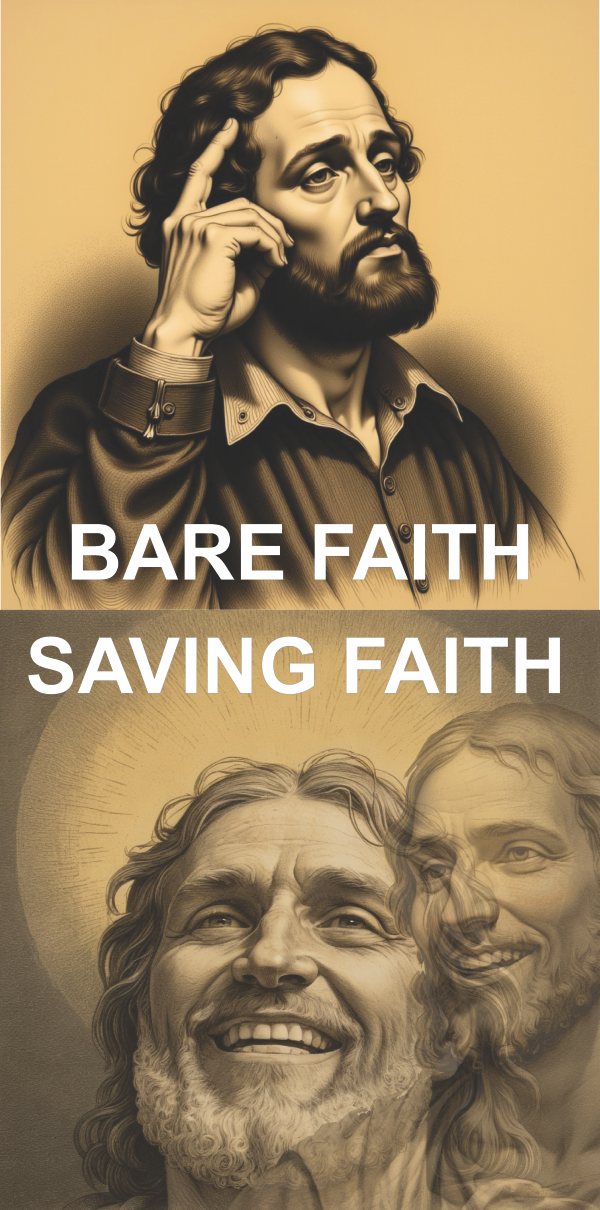 |
In 1695, John Locke (1632-1704) published his The Reasonableness Of Christianity, in which he listed a few minimum requirements for Christian salvation that would later be called "bare faith".
Evangelical ministers categorically condemned it as an endorsement of state churches that did not teach "ye must be born again" as necessary for salvation.
Locke's "bare faith" requirements: You must believe Jesus is the Messiah and that He was raised from the dead. Locke, before the end of the book, says a person who believes these things will live a life according to Jesus' moral teachings, but that, of course, would describe almost every person who attends a state church, even the ones that aren't born again. Locke told every "gospel hypocrite" who attends church, they didn't need to be born again to be saved.
The "bare faith" theory denies the need of supernatural regeneration and the indwelling of the Holy Spirit, which is a radical departure from orthodox teaching, and was condemned as such by his contemporaries. But within 130 years, the bare faith heresy became the main attraction of the Restoration movement, causing entire Baptist churches to "convert" to Campbellism.
Theologians identify bare faith as "uninformed faith", because unless the Holy Spirit supernaturally changes the heart and indwells the "convert", they cannot have "informed faith", which is characterized by " faith working through love", which can happen only when the love of God is shed in the saint's heart through the indwelling Holy Spirit (Galatians 5:6, Romans 5:5).
The irony is if a Restorationist only has bare faith, they are just as lost as the Baptist who never experiences supernatural regeneration and the indwelling of the Holy Spirit, so the reason so many Baptists converted to Campbellism turns out, according to the Bible, to be nothing but a vain effort to get saved without supernatural regeneration and the indwelling of the Holy Spirit.
 |